
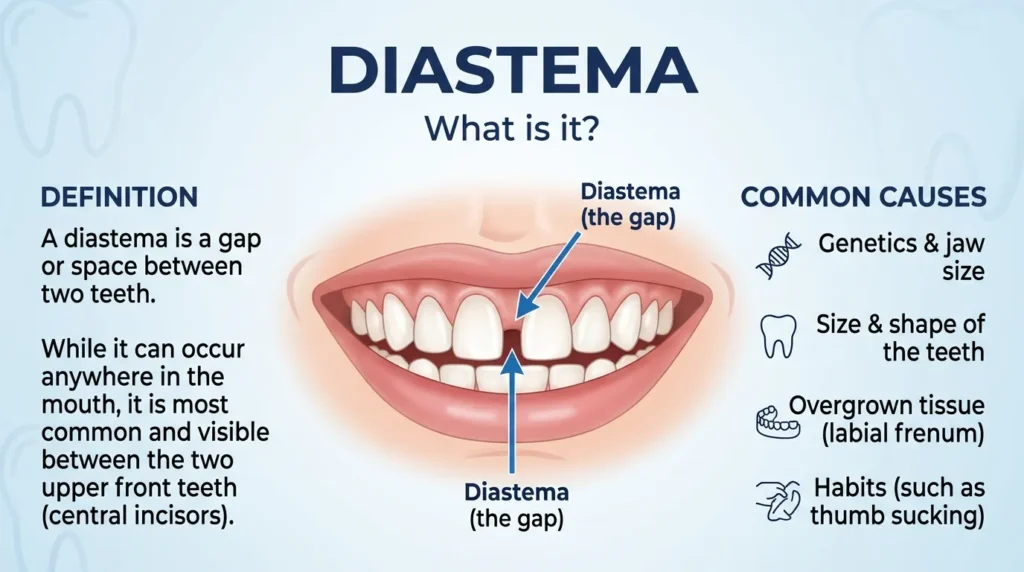

Have you ever seen a small space between someone’s front teeth and wondered what it is called? In dental care, that space has a name: diastema. The diastema meaning is simple. It refers to a gap between two teeth. It often appears between the two upper front teeth, but it can form in other parts of the mouth too.
Some people have this gap from childhood. For them, it may be a normal part of tooth growth. Other people may develop a new gap as adults. This can happen due to tooth size, missing teeth, habits, or gum problems.
A diastema does not always need treatment. Some people like the look of their tooth gap and choose to keep it. Others want to close it for a more even smile. The right choice depends on the cause and the health of the teeth and gums.
This guide explains what diastema means, why it happens, how dentists check it, and which treatments may help.
Quick Answer: What Does Diastema Mean?
Diastema means a gap or open space between two teeth. It is most common between the two upper front teeth. A gap may be part of normal growth, linked to tooth size, or caused by missing teeth or gum disease. Dentists can check its cause and explain whether treatment is needed.
Diastema Definition and Meaning
Diastema is a dental term for a space between two teeth in the same row. The word can describe a gap between any two teeth, not just the front ones.
The American Dental Association also defines diastema as a space between two nearby teeth in the same dental arch. In simple words, it means that two teeth do not touch each other.
The gap may be very small. It may also be wide enough to notice when a person smiles or speaks.
Dentists often use the term midline diastema when the gap sits between the two upper front teeth. This is the type most people think of when they hear the word.
A diastema is not a disease by itself. It is a sign or feature of tooth spacing. The reason for the gap matters more than the name.
What Is a Midline Diastema?
A midline diastema is a gap between the two front teeth in the upper jaw. These teeth are called the upper central incisors.
You may notice this type of gap when a person smiles, talks, or opens their mouth. Some people have it from a young age. Others may see it form later in life.
A midline gap can happen for many reasons. The teeth may be small for the size of the jaw. A tooth may be missing. A band of tissue under the upper lip may also affect the space between the teeth.
In children, a gap between the front teeth can be part of normal growth. As more adult teeth come in, the space may get smaller or close on its own.
In adults, a new or growing gap needs more care. It may point to gum disease or a change in tooth support. A dentist can check the cause.
What Causes Diastema?
There is no single cause of diastema. The reason can differ from one person to another. Here are some common causes.
1. Genetics and Family Traits
Some people inherit a tooth shape or jaw size that makes gaps more likely. For example, their teeth may be small compared with the space in the jaw.
A family may also have a history of gaps between the front teeth. If a parent has a diastema, a child may have one too.
This does not mean every child will have the same tooth spacing. Growth, tooth size, and other factors also play a role.
2. Missing Teeth
A missing tooth can leave an open space in the dental arch. Nearby teeth may move toward that space over time.
This can change how the other teeth sit. It may also lead to gaps in places where the teeth once touched.
A tooth may be missing from birth. It may also be lost due to injury, decay, or dental treatment.
3. Small Teeth or a Large Jaw
A gap can form when the teeth do not fill the space in the jaw. This may happen when the teeth are small or the jaw is wide.
The size and shape of the teeth matter too. Some people have teeth that do not match well in size. This can leave spaces even when the teeth are healthy.
4. A Large Labial Frenum
The labial frenum is a small band of tissue that connects the inside of the upper lip to the gum above the front teeth.
In some people, this tissue sits low or is thick. It may play a role in keeping a gap between the upper front teeth.
However, a large frenum does not always cause a diastema. A dentist must check the teeth and gums before deciding if it needs treatment.
5. Thumb Sucking and Tongue Thrust
Some habits can place extra pressure on the front teeth.
For example, long-term thumb sucking may push the front teeth forward. A tongue thrust habit can also place repeated pressure on the teeth during swallowing.
Over time, this pressure may affect tooth position and spacing. A dentist or orthodontist can check whether an oral habit plays a role.
6. Gum Disease
Gum disease can damage the tissues and bone that hold teeth in place. When the support around the teeth gets weak, teeth may move.
This can cause new gaps or make old gaps wider. You may also notice bleeding gums, swelling, bad breath, or loose teeth.
A new gap in an adult should not be ignored, especially when it comes with gum changes. A dentist can check for gum disease and suggest care.
Is Diastema Normal in Children?
Yes. A gap between the front teeth is common in many children. It can appear as baby teeth fall out and adult teeth begin to grow.
At this stage, the mouth is still changing. The jaw grows, and new teeth move into place. A gap that looks large in a young child may become smaller as more adult teeth come in.
For this reason, parents should not rush to close every gap. A dentist can check the child’s growth and decide whether the space needs care.
If the gap stays after the adult teeth come in, the dentist may suggest an orthodontic check. The dentist will look at the size of the gap, tooth position, and possible causes.
Do not try to push a child’s teeth together at home. Tooth movement needs safe and careful dental care.
Can Adults Develop a New Diastema?
Yes. Adults can develop new spaces between their teeth. A gap may also grow wider over time.
One cause is gum disease. When gum disease harms the bone and tissues around the teeth, the teeth may lose support and shift.
A missing tooth can also change the way nearby teeth sit. Other causes may include tooth size, bite issues, and habits that place pressure on the front teeth.
If you notice a new gap, book a dental exam. This is more important if you also have bleeding gums, pain, swelling, or loose teeth.
Do not assume that a new gap is only a cosmetic issue. The dentist needs to find the cause before planning treatment.
Does Diastema Cause Any Health Problems?
A diastema does not always harm your oral health. Many people have a gap between their teeth and have healthy teeth and gums.
The effect depends on the cause and size of the gap. A small gap may not affect chewing or speech at all.
In some cases, the gap may cause other issues. Food may get stuck between the teeth. A person may also feel unhappy with the look of their smile.
If gum disease causes the gap, the main concern is the health of the gums and bone. The gap is only one sign of a larger problem.
A dentist can check whether the space affects your bite, speech, or oral health. You do not need to close a healthy gap just because it looks different.
Diastema Treatment: How Can You Close a Tooth Gap?
Treatment depends on the cause, size, and position of the gap. Your dentist may suggest one option or a mix of treatments.
1. Braces
Braces use small brackets and wires to move teeth into better positions. They can help close gaps and improve the way the teeth meet.
This option may suit people with larger gaps or other alignment issues. Treatment time depends on the case.
2. Clear Aligners
Clear aligners are removable trays that move teeth over time. They may help close some gaps in people who want a less visible option than braces.
Not every case suits clear aligners. A dentist or orthodontist must check your teeth and bite first.
3. Dental Bonding
Dental bonding uses a tooth-colored resin to change the shape of a tooth. A dentist can add this material to one or both teeth to make the gap look smaller.
Bonding may work well for small spaces. It can often be done in one visit.
However, bonding does not move the teeth. It changes their shape, so the dentist must check that the result looks natural and does not affect your bite.
4. Porcelain Veneers
Veneers are thin shells that cover the front of teeth. They can change the shape, size, and look of teeth.
A dentist may suggest veneers when a person wants to close a gap and improve the look of the front teeth.
Veneers need careful planning. Some types require the dentist to remove a small amount of tooth surface. Ask about the long-term care and risks before choosing this option.
5. Frenectomy
A frenectomy is a small surgery that changes or removes part of the labial frenum.
A dentist or specialist may suggest it when the frenum plays a clear role in the gap. It is not needed for every person with a diastema.
In some cases, the dentist may plan orthodontic care as well. The order of treatment matters, so the dental team should make the plan.
6. Gum Disease Treatment
If gum disease causes the gap, the first step is to treat the gum problem.
Your dentist may suggest a deep cleaning called scaling and root planing. This helps remove plaque and tartar from below the gum line.
More advanced gum disease may need care from a gum specialist. Closing the gap before treating the cause may not give a stable result.
Diastema Treatment Options: Benefits and Limits
Each treatment has a different goal. Some move teeth, while others change how the teeth look. The best choice depends on your dental health and the cause of the gap.
| Treatment | Possible benefit | Limit or concern |
| Braces | Move teeth and close gaps | Takes time and needs regular visits |
| Clear aligners | Less visible tooth movement | Not right for every case |
| Dental bonding | Can close a small gap in one visit | Does not move teeth |
| Veneers | Change tooth shape and look | May need changes to natural tooth surfaces |
| Frenectomy | Treats a frenum that affects the gap | Not useful for every diastema |
| Gum treatment | Treats gum disease that may cause gaps | Does not always close the gap |
Do not choose a treatment based only on price or speed. Ask your dentist why the gap formed and what each option can do.
Diastema Quick Reference: When Should You See a Dentist?
Use this table to decide what to do next. It is a guide, not a way to diagnose the cause at home.
| What you notice | What it may mean | What to do |
| A small gap you have had for years | It may be a natural tooth feature | Discuss it at a routine dental visit |
| A gap in a young child’s front teeth | It may be part of normal growth | Ask the child’s dentist to check it |
| A new gap in adulthood | Teeth may have shifted | Book a dental exam |
| A gap that keeps getting wider | Gum or tooth support may have changed | Arrange a dental visit soon |
| Bleeding, red, or swollen gums | Possible gum disease | See a dentist promptly |
| Loose teeth with a new gap | Possible loss of tooth support | Seek dental care promptly |
| Food often gets stuck in the gap | The space may need care or cleaning advice | Ask your dentist for help |
How Do Dentists Diagnose Diastema?
A dentist can often spot a diastema during a normal dental exam. The next step is to find out why the gap formed.
Your dentist may:
- Look at the size and place of the gap.
- Check your teeth, gums, and bite.
- Ask when you first noticed the space.
- Ask about family history and oral habits.
- Check for missing or small teeth.
- Take dental X-rays if they need to see the roots, bone, or teeth below the gums.
You may also need to see an orthodontist or periodontist. An orthodontist checks tooth position and bite. A periodontist treats gum disease and problems with the tissues that support teeth.
The dentist uses these checks to plan care that fits your needs.
Can You Prevent Diastema?
You cannot prevent every gap between teeth. Some people have tooth and jaw traits that they inherit.
But you can help protect your gums and teeth. This may lower the risk of gaps linked to gum disease or poor tooth support.
Try these simple steps:
- Brush your teeth twice a day with fluoride toothpaste.
- Clean between your teeth each day.
- Visit your dentist for regular exams.
- Ask for help if your gums bleed or swell.
- Get advice about thumb sucking or tongue thrust in children.
- Do not ignore a new gap or loose tooth.
Good oral care cannot change every cause of diastema. But it can help keep your teeth and gums healthy.
FAQs:
1. What does diastema mean in dental terms?
Diastema is the dental term for a gap between two teeth. It often appears between the two upper front teeth, but it can occur between other teeth too.
2. Is diastema a disease?
No. Diastema is a term for tooth spacing, not a disease by itself. A gap may be harmless, but a new or growing gap can point to gum disease or another dental issue.
3. What is the main cause of diastema?
There is no single main cause for every person. Common causes include family traits, small teeth, a large jaw, missing teeth, a large labial frenum, and some oral habits. Gum disease can also cause gaps in adults.
4. Does diastema go away on its own?
In some children, a gap may close as adult teeth come in. This does not happen in every case. A gap between adult teeth is less likely to close on its own, so a dentist should check it if it changes or causes concern.
5. Is a gap between front teeth attractive or normal?
A gap between front teeth can be a normal feature. Some people like how it looks, while others prefer a closed smile. There is no need to change a healthy gap just to match a certain look.
6. How do dentists fix diastema?
Dentists may use braces, clear aligners, bonding, or veneers to close a gap. If a frenum or gum disease causes the problem, the dentist may treat that issue first. The right plan depends on the cause.
7. Can diastema get bigger with age?
It can. Teeth may shift over time, and gum disease can weaken the support around them. If a gap grows, especially with bleeding gums or loose teeth, book a dental exam.
Conclusion:
The diastema meaning is a space between two teeth. It often appears between the upper front teeth, but it can form anywhere in the mouth. Some gaps are a normal part of growth or a family trait. Others may come from missing teeth, oral habits, or gum disease.
You do not need to close every gap. The key is to know why it formed and whether it affects your dental health. If the space is new, growing, or comes with bleeding gums or loose teeth, see a dentist. If you want a change for your smile, ask about safe options that fit your needs.

I am Peter Sokolowski a passionate about English vocabulary, word meanings, and the fascinating ways language evolves over time. I enjoy exploring definitions, researching word histories, and explaining how different words are used in everyday communication. Through my work at Publarex.com, I aim to make English easier for readers by providing clear definitions, simple explanations, and practical examples. I believe every word has a story, and understanding its meaning can help people communicate more effectively.