
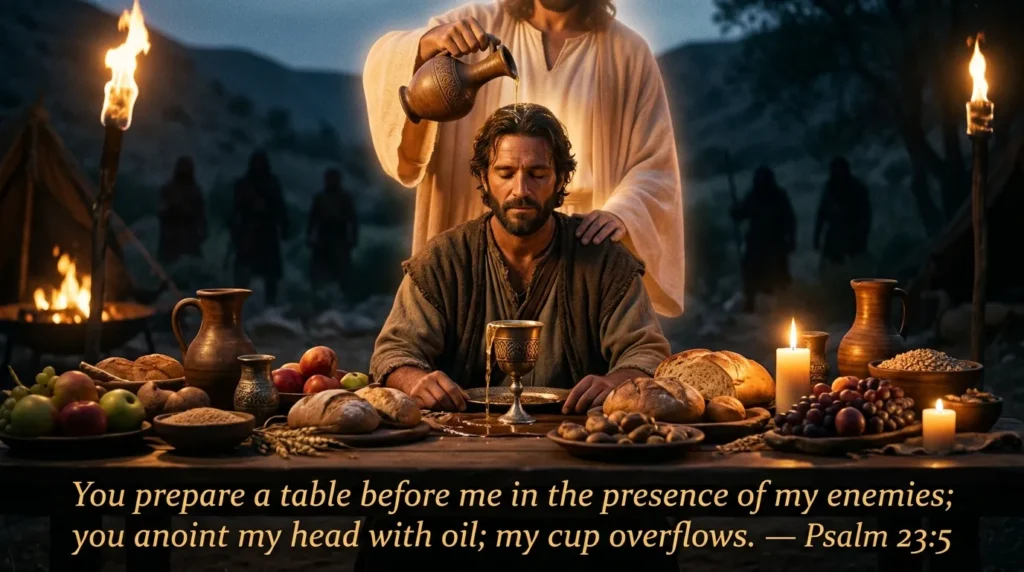

Quick Answer: Psalm 23:5 means that God provides, protects, and blesses His people even when they face enemies, fear, or difficult situations.
The verse describes God as a generous host who prepares a table, anoints the believer’s head with oil, and fills their cup until it overflows.
Psalm 23:5 Meaning
The Psalm 23:5 meaning is about God’s protection, provision, favor, and generous love. This verse shows that God can care for His people even when they are surrounded by trouble or opposition.
Psalm 23:5 comes from a beautiful song written by David. In this verse, David describes God as someone who prepares a table for him in front of his enemies. He also says that God anoints his head with oil and makes his cup overflow.
The verse uses three powerful pictures:
- A prepared table: God provides for His people and welcomes them with care.
- Anointed head with oil: God shows honor, kindness, and favor.
- An overflowing cup: God’s blessings and goodness are more than enough.
These pictures teach an important lesson about faith. God’s care does not disappear when life becomes difficult.
David does not say that he has no enemies or problems. Instead, he explains that God’s presence and provision remain with him even in their presence.
In simple words, Psalm 23:5 reminds believers that God can provide peace, strength, and blessings even during difficult seasons.
What Does Psalm 23:5 Say?
Psalm 23:5 (King James Version) says:
“My cup runneth over.”
The complete verse reads:
“Thou preparest a table before me in the presence of mine enemies: thou anointest my head with oil; my cup runneth over.” — Psalm 23:5 (KJV)
This verse is part of Psalm 23, where David describes the Lord as his shepherd. Earlier, he talks about green pastures, quiet waters, and God’s guidance.
In verse 5, the picture changes from a shepherd caring for sheep to a generous host welcoming a guest. This image shows God’s personal care, protection, and generosity.
The verse has three main parts. God prepares a table, anoints David’s head with oil, and fills his cup until it overflows.
Each part gives a different picture of God’s goodness. Together, they show that David trusts God to provide for him, honor him, and care for him even when enemies are nearby.
Psalm 23:5 Explained Line by Line
Understanding each part of Psalm 23:5 makes its message easier to remember. David uses familiar images from his world to explain spiritual truths about God’s relationship with His people.
1. “Thou Preparest a Table Before Me”
This phrase means that God provides for David and welcomes him like an honored guest.
In ancient times, preparing a table was a sign of hospitality. A host would offer food, shelter, and care to someone who entered their home.
David uses this picture to explain how God looks after him. He sees God as someone who does not leave him without help.
The table can also represent spiritual nourishment, peace, and the blessings God provides.
For Christians today, this phrase is a reminder to trust God for daily needs. It encourages believers to remember that they are not alone when facing uncertainty.
2. “In the Presence of Mine Enemies”
This phrase means that God’s care remains with David even when people oppose him or when he faces danger.
David had experienced serious challenges during his life. He faced enemies, conflict, rejection, and times when his safety was uncertain.
Yet he describes a table prepared for him right in front of those enemies. This is a powerful picture of confidence and security.
Notice that David does not say his enemies have disappeared. Instead, he explains that their presence does not stop God from caring for him.
For believers, this part of the verse teaches that difficult people and situations do not have to control their faith or steal their peace.
3. “Thou Anointest My Head With Oil”
This phrase describes an act of honor, welcome, and care.
In biblical times, oil was sometimes placed on a person’s head as a sign of hospitality and respect. It could also be used for comfort and refreshment.
David uses this image to describe God’s kindness toward him. God does not simply provide basic needs; He treats him with love and generosity.
Anointing with oil also has important meanings throughout the Bible. It can be connected with setting someone apart for a special purpose.
However, in Psalm 23:5, the picture mainly highlights the care and honor of a generous host.
For Christians, this phrase can remind them that God sees their struggles and treats them with compassion.
4. “My Cup Runneth Over”
This phrase means that David has received more than enough from God’s goodness.
A cup that runs over is filled beyond its normal limit. David uses this picture to describe how generous God’s provision feels to him.
He is not simply saying that he has enough food or money. He is expressing gratitude for God’s goodness, care, and blessings.
The phrase can also remind Christians to appreciate the blessings they already have rather than focusing only on what is missing.
It teaches a heart of gratitude, even when life is not perfect.
What Does Psalm 23:5 Mean Spiritually?
Spiritually, Psalm 23:5 teaches that God is a provider, protector, and source of lasting peace.
The verse encourages believers to trust God even when they face challenges. David’s enemies are still present, but he knows that God’s care is greater than his fear.
The prepared table represents God’s provision. The anointing represents His kindness and honor. The overflowing cup represents His abundant goodness.
These images also remind Christians that blessings are not limited to material things. God’s peace, wisdom, strength, forgiveness, and presence are also valuable gifts.
The spiritual message is not that believers will never experience hardship. Rather, it is that they can continue trusting God through hardship.
Psalm 23:5 invites Christians to develop a thankful heart and depend on God instead of allowing fear to control their lives.
Why Does God Prepare a Table in the Presence of Enemies?
God preparing a table in the presence of enemies is a picture of His care and protection during difficult situations.
David could have described a peaceful place without enemies. Instead, he chooses an image where his enemies are still nearby.
This detail makes the verse especially meaningful. It shows that God’s provision does not depend on having a perfect life or being free from every problem.
For example, someone may experience criticism at work but still find strength through prayer and faith. Another person may face family conflict but continue to experience God’s comfort.
The table represents God’s ability to provide peace and care even when the surrounding situation is uncomfortable.
It is also a reminder that believers do not need to let every negative voice determine their worth or future.
What Does Anointing With Oil Mean in Psalm 23:5?
Anointing with oil in Psalm 23:5 represents hospitality, honor, kindness, and refreshment.
In ancient cultures, oil could be used to welcome and refresh guests. A host who anointed a visitor’s head showed that the visitor was valued and respected.
David uses this familiar practice to describe God’s generous treatment of him.
The Bible also connects anointing oil with special religious purposes. For example, priests and kings were anointed as part of their calling.
However, the context of Psalm 23:5 focuses on the image of God as a caring host. It shows that David feels welcomed, valued, and blessed by God.
For Christians, this picture can encourage confidence in God’s love and care.
How to Apply Psalm 23:5 to Your Daily Life
Psalm 23:5 is more than a beautiful Bible verse. It offers practical lessons for people dealing with stress, uncertainty, relationships, and everyday struggles.
Here are eight ways to apply its message.
1. Trust God during difficult times.
Do not assume that a difficult season means God has forgotten you. David describes God’s care even when enemies are present.
2. Practice gratitude.
The overflowing cup is a picture of abundance. Take time to thank God for the blessings, support, and opportunities already present in your life.
3. Do not let criticism control you.
The verse reminds believers that other people’s opposition does not decide their value. Focus on living with faith, kindness, and integrity.
4. Pray when you feel uncertain.
When you do not know what to do, bring your concerns to God through honest prayer. Ask for wisdom, patience, and strength.
5. Remember that God’s provision has many forms.
Provision can include food, shelter, supportive people, emotional strength, wisdom, and opportunities.
6. Show kindness to others.
Just as the verse uses a table to represent hospitality, Christians can show God’s love by welcoming and helping people around them.
7. Keep your faith during challenges.
Problems may remain for a while, but they do not have to remove your hope. Continue trusting God one day at a time.
8. Recognize blessings beyond money.
Peace, healthy relationships, forgiveness, and spiritual growth are also reasons to be thankful.
These lessons help believers turn the message of Psalm 23:5 into everyday actions.
Psalm 23:5 vs. Psalm 23:6
Psalm 23:5 and Psalm 23:6 are closely connected, but each verse highlights a different part of God’s care.
| Psalm 23:5 | Psalm 23:6 |
| Focuses on God’s provision and generosity. | Focuses on God’s goodness and mercy. |
| Describes a prepared table. | Describes goodness and mercy following David. |
| Mentions anointing with oil. | Describes dwelling in the house of the Lord. |
| Shows God’s care during opposition. | Shows confidence in God’s lasting presence. |
Psalm 23:5 describes God’s blessings in the middle of difficult circumstances. Psalm 23:6 looks toward a life filled with God’s goodness and the hope of remaining close to Him.
Together, these verses show that God’s care is not limited to one difficult moment. David trusts Him throughout his life.
Psalm 23:5 in Texting and Social Media
Psalm 23:5 is often shared in Christian social media posts, prayer messages, Bible study groups, and personal reflections.
People may use the verse to express gratitude, encourage someone facing difficulties, or remind others that God’s blessings are greater than life’s challenges.
The phrase “my cup runneth over” is especially popular in Christian conversations because it expresses thankfulness and a sense of having more than enough.
Here are three original examples of how someone might use it online.
Example 1: Instagram caption
“Even in difficult seasons, God continues to provide. My cup runneth over. Psalm 23:5.”
Example 2: WhatsApp message
Friend: I’m worried about everything happening at work.
You: Keep trusting God. He can prepare a table even in difficult places. Psalm 23:5.
Example 3: Facebook post
“Today, I’m choosing gratitude over worry. God’s goodness has given me more reasons to be thankful than I can count.”
The verse is not internet slang. Its original biblical message remains the same when people share it online.
FAQs:
1. What is the main message of Psalm 23:5?
The main message of Psalm 23:5 is that God provides, protects, and cares for His people even when they face opposition. David uses the images of a prepared table, anointed head, and overflowing cup to express God’s generosity.
2. What does “my cup runneth over” mean in Psalm 23:5?
“My cup runneth over” means that David feels he has received more than enough of God’s goodness and provision. It expresses gratitude, abundance, and appreciation for God’s blessings.
3. What does God preparing a table before me mean?
It means that God provides for and welcomes David like an honored guest. The table represents care, hospitality, nourishment, and provision even when enemies are nearby.
4. What does anointing my head with oil mean?
Anointing the head with oil was an ancient sign of hospitality, honor, and refreshment. In Psalm 23:5, it describes God’s generous and loving care toward David.
5. Who wrote Psalm 23:5?
Psalm 23 is traditionally attributed to David, the king of Israel. The psalm describes his trust in God as his shepherd and caring host.
6. Does Psalm 23:5 mean Christians will never have enemies?
No. David specifically mentions his enemies in the verse, showing that opposition can still exist. The message is that God’s care and provision remain present even during difficult circumstances.
7. How can I use Psalm 23:5 in my prayer?
You can use Psalm 23:5 to thank God for His provision, ask for peace during difficult situations, and express trust in His care. You can also pray for a grateful heart that recognizes blessings beyond material things.
Conclusion:
The Psalm 23:5 meaning reminds Christians that God’s provision, protection, and goodness remain present even during difficult seasons.
The prepared table represents His care, the anointed head represents honor and hospitality, and the overflowing cup represents abundant blessings.
When reading this verse, remember that God’s goodness is not measured by a problem-free life but by His faithful presence through every situation.

Hey, I am passionate about exploring the meanings of English words and helping people understand language in a simple way. I enjoy researching word definitions, discovering different meanings, and explaining how words are used in everyday conversations. At Publarex.com, I focus on creating easy-to-understand explanations of words, slang, phrases, and expressions. I believe that knowing the meaning of a word is important for better communication and learning. My goal is to help readers find accurate information, expand their vocabulary, and understand English with confidence.