
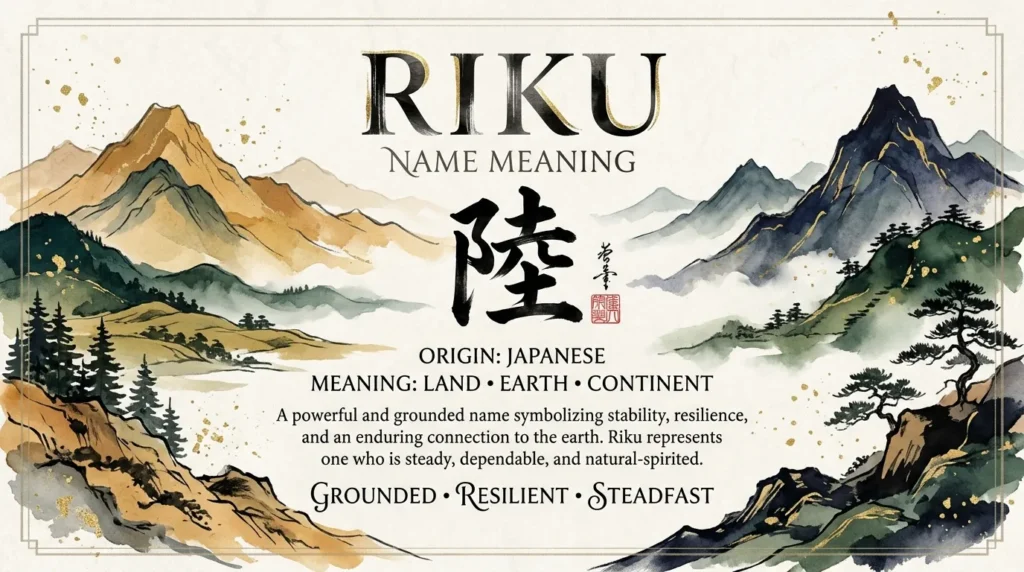

Some names sound simple but carry a deep idea. Riku is one of them. It is a short Japanese name with a calm, strong sound. Many parents like it because it feels modern and has a link to nature.
The most common meaning linked to Riku comes from the Japanese kanji 陸, which means “land” or “shore.” This gives the name an image of solid ground, open land, and a close link to nature. But there is one key detail: Riku does not have just one fixed meaning. Japanese names can use different kanji with the same sound. Each spelling may carry a different idea.
In this guide, you will learn the Riku name meaning, Japanese origin, pronunciation, gender use, and common kanji forms. You will also see what to know before choosing Riku for a baby. This will help you understand both the sound of the name and the meaning behind its written form.
Quick Answer: What Does the Name Riku Mean?
Riku is a Japanese given name often written as 陸. In this form, it means “land” or “shore.” The name is commonly used for boys, but records also show female use. Its meaning can change when parents choose other kanji to write it.
Riku Name Meaning and Definition
The name Riku has a Japanese origin. Its best-known written form is 陸, a kanji that means land or shore. This meaning gives the name a strong link to the natural world.
Think of firm ground beside the sea or a wide stretch of land. These images can make Riku feel calm, steady, and strong. Some parents may like the name because it brings to mind nature and a sense of stability.
Still, it is important to understand how Japanese names work. A spoken name and its written form do not always tell the same story. The sound Riku can match more than one kanji combination. So, the meaning depends on the exact spelling chosen by the family.
If you meet someone named Riku, you should not assume that their name uses 陸. Ask how they write it if the kanji meaning matters to the conversation.
What Is the Origin of the Name Riku?
Riku comes from Japanese. It is written in the Latin alphabet as Riku when people use it in English. In Japanese, it can appear in hiragana as りく or katakana as リク.
The name is often linked to the kanji 陸. This character has the meaning “land” or “shore” in Japanese. It also appears in other Japanese words related to land and ground.
Riku is a Japanese given name, not an English name with a Japanese sound. People outside Japan may also use it, but its name roots are Japanese.
The name has a simple form. It is short, easy to spell in English, and has two Japanese sound units. These features can make it appealing to parents who want a name that is brief but has a clear cultural link.
How Do You Pronounce Riku?
Riku is pronounced in two parts: ree-koo. The first part sounds like “ree,” and the second sounds like “koo.”
In Japanese, the name is written りく in hiragana. It has two mora, or basic sound beats: り and く. The English guide “ree-koo” is only an aid. Japanese vowels and rhythm may sound a little different from English speech.
Here are a few simple tips:
- Say the two parts clearly.
- Keep the sound smooth and even.
- Do not add an extra syllable.
- Avoid stressing one part too strongly.
If you are choosing Riku for your child, you can practice saying it with your family name. This helps you hear how the full name sounds in daily life.
Riku Name Meaning in Japanese Kanji
Kanji are characters used in Japanese writing. Many kanji have their own meanings, and parents may choose them to give a child’s name a special idea.
Riku is a good example of this. The sound can stay the same while the written form changes. The most familiar form, 陸, means land. Other recorded spellings may combine characters linked to ideas such as reason, beauty, flowers, or long life.
However, do not treat every possible character combination as a standard or common spelling. A name database may record unusual forms that a family has used, but that does not mean every form is widely used in Japan.
Here are some examples of how the written form can affect the meaning:
陸 (Riku)
This is the main kanji form linked to Riku. It means “land” or “shore.” It can bring to mind firm ground, open spaces, and nature.
りく (Riku)
This is the hiragana form. It shows how the name sounds, but it does not give the name a kanji meaning. A family may choose this form for its simple look.
リク (Riku)
This is the katakana form. Katakana often appears in foreign words, names, and other settings. Like hiragana, it shows the sound rather than a specific kanji meaning.
Other Kanji Combinations
Some name records list other kanji combinations for the reading Riku. For example, 凛久 combines characters associated with dignity or severity and a long time. 利久 uses characters linked to benefit and long life.
These are examples of recorded name spellings, not fixed meanings for every person named Riku. The family’s chosen characters matter.
Is Riku a Boy or Girl Name?
Riku is most often presented as a Japanese boy’s name in many name guides. However, it is not limited to boys. Japanese name records also include female use of the same reading.
The exact kanji can affect how people view a name. Some written forms may be more common for boys, while other forms may appear in female name records. The sound alone does not always tell you the person’s gender.
If you are choosing a name for a baby, Riku can be considered a flexible option. But if you want to follow common Japanese naming patterns, check the exact kanji and how it is used.
It is also worth asking a Japanese speaker or a trusted naming source for help. This can help you avoid a spelling that looks unusual or does not give the meaning you want.
What Does Riku Symbolize?
When a family chooses the kanji 陸, the name has a clear link to land and shore. Some parents may connect this meaning with ideas such as strength, stability, and a firm base in life.
These are symbolic ideas, not direct dictionary meanings of the name. The kanji means land or shore. The values a family sees in it are personal.
For example, parents may like the idea of a child who grows with a strong sense of self. Others may enjoy the link to nature and the image of land beside the sea.
The meaning can also change with a different kanji choice. A spelling that uses characters linked to beauty, reason, or long life may carry a different family message.
Is Riku a Good Name for a Baby?
Riku may be a good choice if you want a short Japanese name with a clear sound and a nature-based meaning. It is easy to write in English and has a simple two-part pronunciation.
Before you choose it, think about more than how it sounds. The written form is just as important if you want the name to carry a certain meaning.
Here are a few things to consider:
- Meaning: Choose the kanji that reflects the idea you want.
- Pronunciation: Say the name with your family name.
- Culture: Learn how the name works in Japanese.
- Spelling: Decide whether you want kanji, hiragana, or katakana.
- Daily use: Think about how family, friends, and teachers will say it.
- Personal value: Choose a meaning that feels right to your family.
If you are not Japanese, it can also help to learn about the culture behind the name. This shows respect for its roots and helps you make a thoughtful choice.
Riku vs. Similar Japanese Names
Riku has a short and clear sound. If you like it, you may also want to look at other Japanese names with a nature link or a similar style.
The table below compares Riku with a few other Japanese names. The meanings shown are tied to the kanji listed, and other spellings may have different meanings.
| Name | Japanese writing | Meaning of the listed kanji | Main idea |
| Riku | 陸 | Land or shore | Land and nature |
| Ren | 蓮 | Lotus | Flower and nature |
| Sora | 空 | Sky | Open space |
| Haru | 春 | Spring | Season and renewal |
| Rikuto | 陸人 | Land + person | A name combining land and person |
These names do not all share the same origin or meaning beyond their Japanese use. The table gives one common written form for each. Always check the exact characters before you decide what a name means.
Riku Name Facts: A Quick Reference
Use this table to review the main facts about Riku before choosing it or sharing its meaning.
| Name detail | Information |
| Name | Riku |
| Origin | Japanese |
| Common kanji | 陸 |
| Meaning of 陸 | Land or shore |
| Hiragana | りく |
| Katakana | リク |
| Pronunciation | Ree-koo (approximate) |
| Sound units | Two mora |
| Gender use | Mainly masculine in many guides; also recorded for girls |
| Name style | Short, simple, nature-linked |
Does Riku Have a Special Meaning in Other Cultures?
Riku is best known as a Japanese given name. If you see it in another country, it may be used because a family likes the sound, has a Japanese connection, or knows someone with the name.
The meaning “land” or “shore” comes from the Japanese kanji 陸. It should not be treated as the meaning of every use of the name in every language.
It is also important not to mix up a name’s meaning with the meaning of a fictional character. A character named Riku may have a story, personality, or role that adds a special meaning for fans. That does not change the Japanese meaning of the kanji.
When you research a name, keep these ideas apart:
- Its language and cultural origin.
- Its written form.
- The meaning of each kanji.
- The personal meaning a family gives it.
- The meaning it may have in a book, game, or show.
This helps you avoid false claims and gives you a clearer view of the name.
FAQs:
1. What does Riku mean in Japanese?
Riku is often written with the kanji 陸, which means “land” or “shore.” However, Japanese names can use different kanji with the same reading. The meaning depends on the written form chosen by the family.
2. Is Riku a rare Japanese name?
Riku is a known Japanese given name, especially as a masculine name. Its use can vary by age group, region, and written form. A single name list cannot show how common it is among all people in Japan.
3. Is Riku a male or female name?
Riku is commonly listed as a masculine Japanese name, but female use is also recorded. The kanji and family choice can affect how people view the name. It is best not to judge gender from the sound alone.
4. What does the kanji 陸 mean?
The Japanese kanji 陸 means “land” or “shore.” It is the main character linked to the name Riku. It can bring to mind solid ground and the natural world.
5. How do you say Riku?
Riku has two sound units and is often shown in English as “ree-koo.” In Japanese, it is written りく. The English guide is close, but it does not show every detail of Japanese speech.
6. Can Riku be written without kanji?
Yes. Riku can be written in hiragana as りく or katakana as リク. These forms show the sound of the name. They do not carry the same character meanings as a kanji spelling.
7. What is a good nickname for Riku?
Possible nicknames include Rik, Riku-chan, and Rikkun. The best choice depends on the person, family, and social setting. In Japanese, forms such as りくちゃん or りっくん can sound warm and friendly, but their use depends on the relationship.
Conclusion:
The Riku name meaning is most often linked to the Japanese kanji 陸, which means “land” or “shore.”
This gives the name a simple link to nature and the idea of firm ground. Riku is commonly used as a boy’s name, though female use also appears in name records.
The most important thing to remember is that the meaning can change with the kanji. If you plan to use Riku for a baby, check the exact written form and its meaning before making your choice.
A trusted Japanese language source can help you confirm the spelling and reading. Take time to choose a form that feels right and has meaning for your family.

Hey, I am passionate about exploring the meanings of English words and helping people understand language in a simple way. I enjoy researching word definitions, discovering different meanings, and explaining how words are used in everyday conversations. At Publarex.com, I focus on creating easy-to-understand explanations of words, slang, phrases, and expressions. I believe that knowing the meaning of a word is important for better communication and learning. My goal is to help readers find accurate information, expand their vocabulary, and understand English with confidence.